
Educational Pack · 05
Exchange-Traded Derivatives
Source PDF: GUIDE-TO-UNDERSTANDING-ASSET-CLASSES-EXCHANGE-TRADED-DERIVATIVES-ETD.pdf
U Wealth : Your partner in mastering financial instruments. We want you to feel comfortable making suitable investment decisions based on knowledge of the opportunities and risks of given financial instruments. — September 2026
What are derivatives?
A derivative is a security whose price is dependent on, or derived from, one or more underlying asset. The derivative itself is merely a contract between two or more parties.
There is a crucial difference between a direct investment and an investment in a derivative:
- when directly investing in a financial instrument such as a stock or a bond, the investor participates directly in its risks, gains, and losses.
- when investing in a derivative, the investor invests in a contract, note, unit, or certificate. This adds specific characteristics, risks, obligations, and/or rights to the assets on which the derivative is based.
An underlying can consist of a single asset or multiple assets. The most common underlying assets include stocks, bonds, commodities, currencies, interest rates, and market indices.
The value of the derivative depends in a non-linear way on the price of its underlying.
A derivative may be traded over the counter (unlisted) or be standardised and traded on public exchanges.
Advantages / disadvantages
Advantages
- Cost efficiency by leverage: the gross amount invested is smaller than trading the individual underlyings.
- Hedging instruments: losses can be limited by long options (buying a right).
- Flexibility: ability to trade a wide range of underlyings and to lock in prices.
- They are usually liquid instruments.
Disadvantages
- Options have a 'time decay'; the time value of the option decreases over the investment period.
- They can have higher spreads and commissions per dollar invested.
- If used with a speculative intention, strategies such as leverage and short selling bear the risk of overproportional or even unlimited losses.
What are options?
An option represents a right (if 'long') or an obligation (if 'short') to sell or buy an asset (underlying) at a specific price (strike price) on a specific date (exercise date).
There are two basic types of options:
| Type | Definition |
|---|---|
| Call option | call option: the right to buy the option if the investor is long the option contract, or the obligation to sell it if the option is short. |
| Put option | put option: the right to sell the option if the investor is short the option contract, or the obligation to buy it if the option is short. |
Important risks to consider
| Risk | Description |
|---|---|
| Price Risk | The value of an option varies due to various factors. The most important ones are the price of the underlying, the volatility of a price, and the time of expiration of the option. |
| Market risk | The price of the underlying, a major factor influencing the price and pay-off of the option, is subject to market risk. |
| Leverage | When investing in derivatives, small investments can control larger values. This 'multiplier effect' maximizes risks, as well as gains, from the investments. |
What to expect from options
| Investment horizon | Income expectation | Market expectation |
|---|---|---|
| Shorter term | Capital gain | Increasing |
| Decreasing | ||
| Sideways | ||
| High volatility |
Important to know before investing in call options
| Buy a call (buy a right to buy) | Sell a call (sell a right to buy) | |
|---|---|---|
| Maximum gain | Unlimited (difference between actual underlying price and strike price at exercise date) | Option premium |
| Maximum loss | Option premium | Unlimited (difference between strike price and actual underlying price at exercise date) |
| Expectations | Rising price of underlying | Stable or falling price of underlying |
| Obligations | Pay the option premium | Deliver underlying at exercise date (if executed) |
| Rights | Buy the underlying asset at exercise date at the strike price | Receive option premium |
| Conditions | Collateral or margin required |
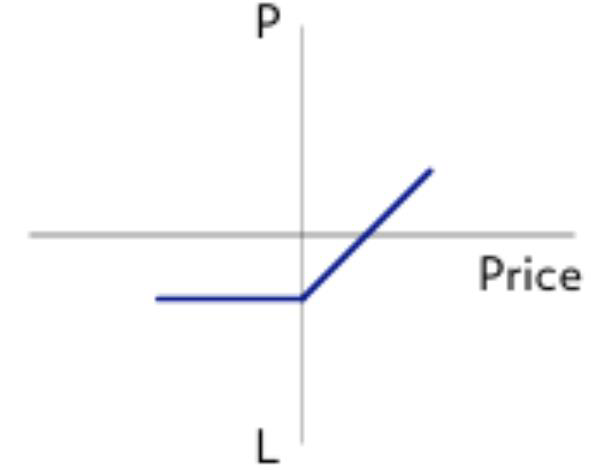
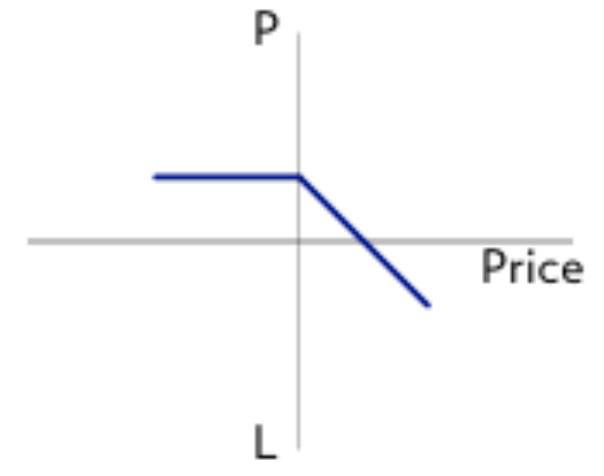
Option value changes are not linear with price movements of the underlying asset. Depending on the option type, exercise can be on a single date (European option) or at any time until expiration (American option).
Important to know before investing in put options
| Buy a call (buy a right to buy) | Sell a call (sell a right to buy) | |
|---|---|---|
| Maximum gain | Strike price minus option premium | Option premium |
| Maximum loss | Option premium | Strike price minus option premium |
| Expectations | Falling price of underlying | Stable or rising price of underlying |
| Obligations | Pay premium | Buy underlying at exercise date at strike price (if executed) |
| Rights | Sell the underlying asset at exercise date at the strike price | Receive option premium |
| Conditions | Collateral or margin required |
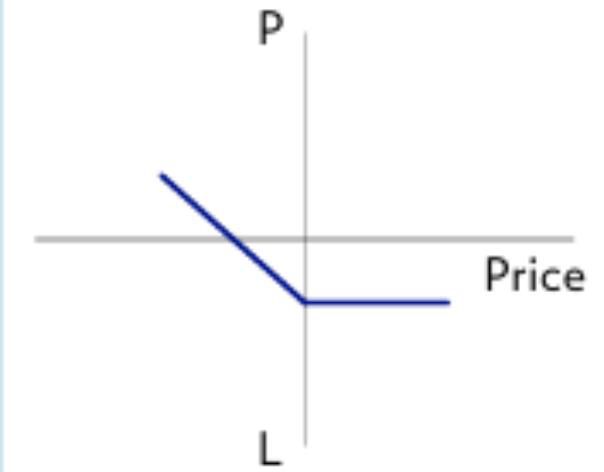
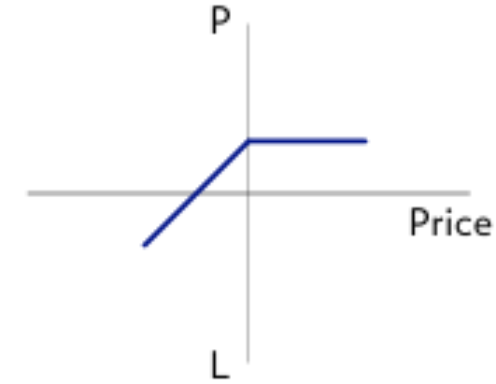
Option value changes are not linear with price movements of the underlying asset. Depending on the option type, exercise can be on a single date (European option) or at any time until expiration (American option).
A closer look at options
General types of options (1/2)
The right (option) is only exercised when it is favourable to the buyer. An option is exercised at specific dates. The most common date schemes are either at maturity only (European option) or anytime during the lifetime (American option).
| Call option | Put option |
|---|---|
| The right to buy the underlying. | The right to sell the underlying. |
General types of options (2/2)
| Position | Meaning | Types |
|---|---|---|
| Buying (=long position) | The buyer owns a right but no obligation. | Buying a call: buying the right to buy the underlying. Buying a put: buying a right to sell the underlying. |
| Selling (=short position) | The seller sells a right and contracts an obligation. | Selling a call: selling the right to buy the underlying. Selling a put: selling the right to sell the underlying. |
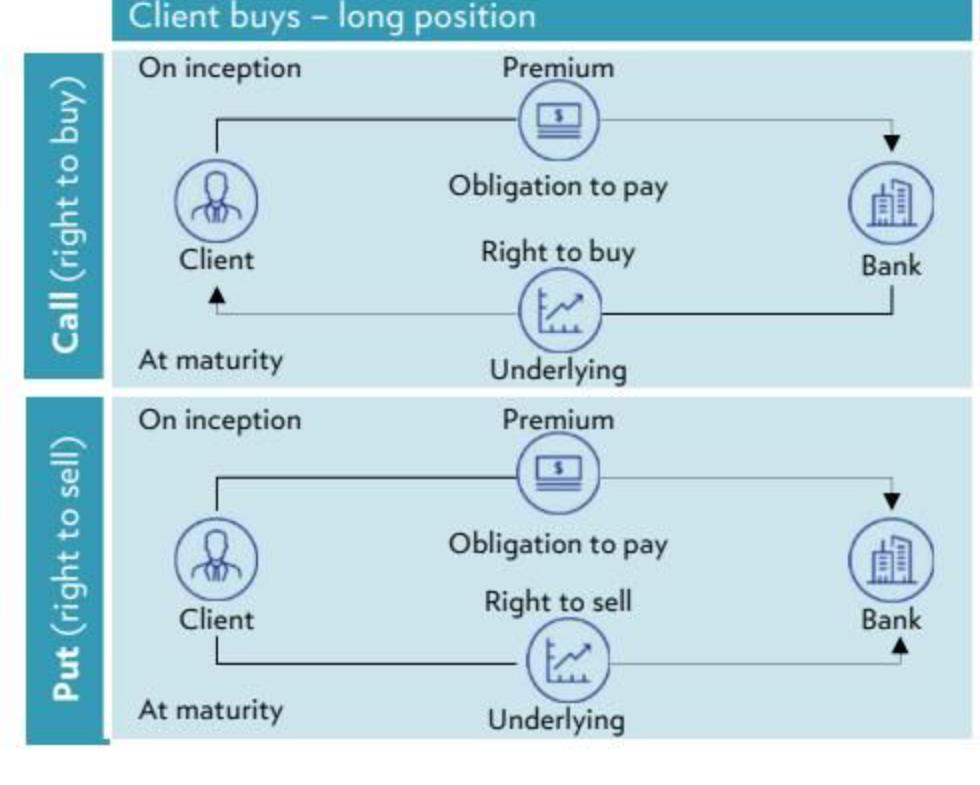
How options work (1/2)
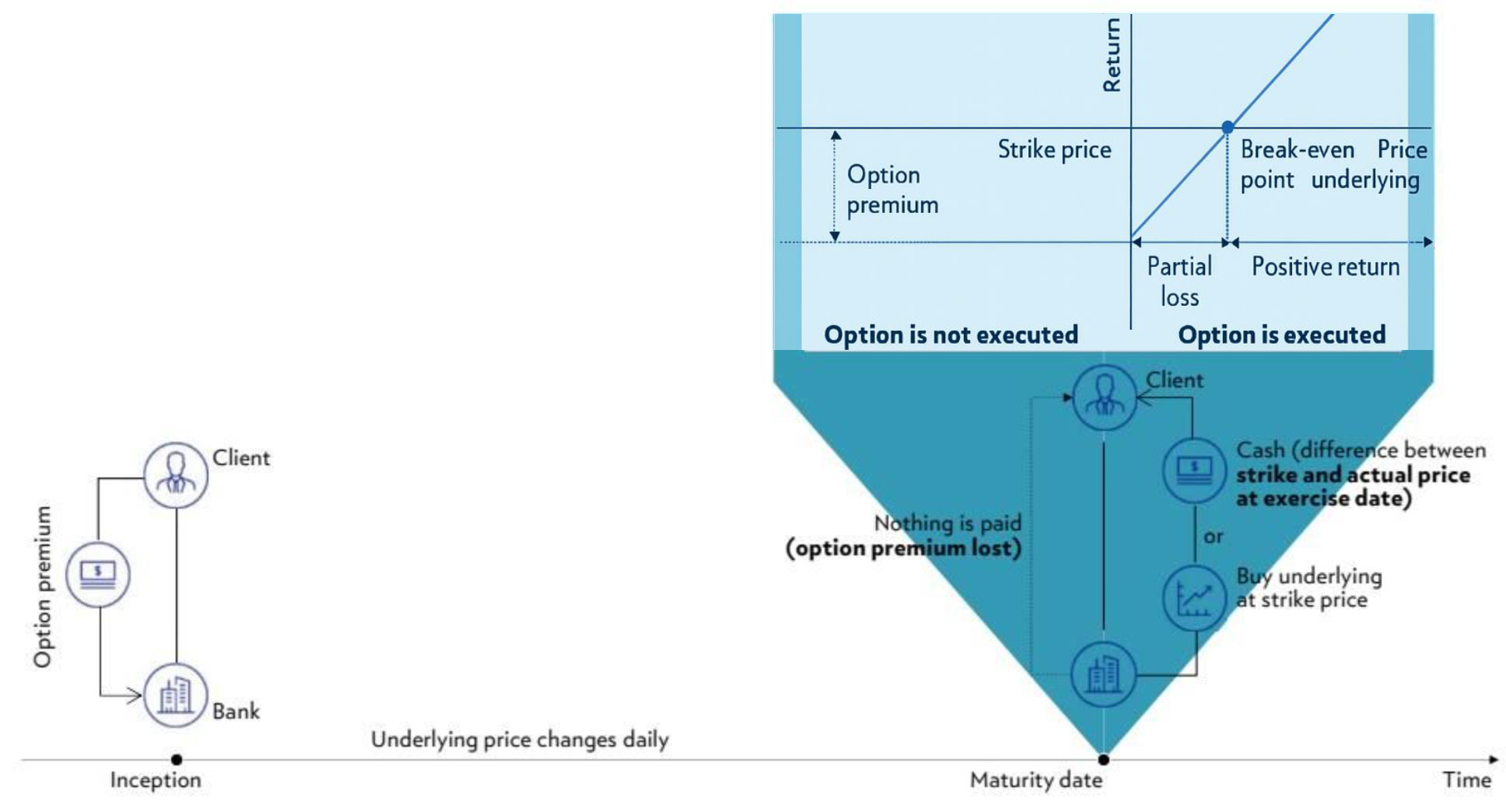
Example: Buying a European call option
Buying a call option is buying the right to buy an asset (underlying): at a specific date (exercise date) and at a specific price (strike price).
The option premium is paid at inception. During the lifetime, the price of the underlying, and thus of the option itself, changes on a daily basis.
A decision is made at maturity:
- if it is profitable to the buyer, the right is exercised
- if it is a potential loss, the right is not exercised
How options work (2/2)
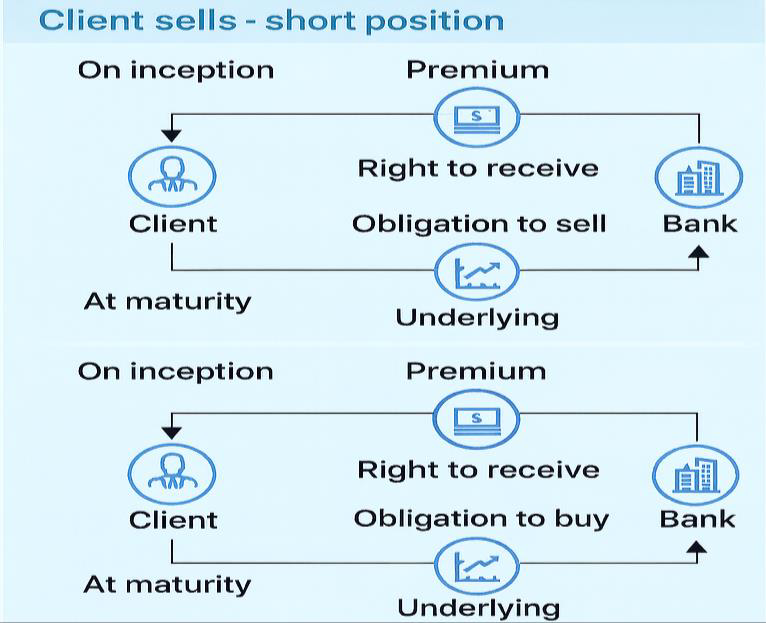
Profit and loss profiles examples
| Long call | Short call | Long put | Short put | |
|---|---|---|---|---|
| Strike price (CHF) (at exercise date t1) | 180 | 225 | 53 | 15 |
| Current spot price (CHF) (between t0 and t1) | 300 | 105 | 25 | 10 |
| Option premium received/paid (at t0) (CHF) | 20 | 10 | 5.10 | 0.72 |
| Break-even point (CHF) | 200 | 235 | 50.50 | 14.30 |
| Maximum loss | Option premium | Unlimited | Option premium | Strike minus option premium (1) |
| Maximum gain | Unlimited | Option premium | Strike minus option premium | Option premium |
(1) In case the underlying asset has a value of zero, the loss is the strike price (minus the option premium collected).
‘Moneyness’ and risks
Buyers will exercise the option when it is profitable for them. The ‘moneyness’ indicates if an option is in the ‘profit zone’ or would represent a loss.
| Call | Moneyness and execution | Put |
|---|---|---|
| Spot price < strike price | Out-of-the-money → no execution. If the option was to be exercised now, losses would be incurred. | Spot price > strike price |
| Spot price ≈ strike price | At-the-money → execution. If the option was to be exercised now, losses would be reduced but break-even point would not yet be reached. | Spot price ≈ strike price |
| Spot price > strike price | In-the-money → execution. If the option was to be exercised now, a profit would be incurred. | Spot price < strike price |
- The risks of long options (buying call or put) are limited to the option premium.
- The risks of short options can theoretically be unlimited, specifically if the sale is uncovered (i.e. not in possession of the underlying asset).
- The option price varies with the price of the underlying asset. However, option prices do not respond in a linear way to price movements of the underlying, since many factors contribute to the option price (see below). Thus, the investor carries risks in addition to the pure market risks to which the underlying is exposed.
- When trading standardized options, the trading is executed on an exchange (e.g. Chicago Board Options Exchange, Eurex), thus the counterparty risk is minimized. If options are traded over-the-counter, the credit risk of the issuer needs to be taken into consideration.
Option price factors (1/2)
Intrinsic value and time value
The price of an option is composed of two components: intrinsic value and time value. The intrinsic value of the option is the difference between the strike price and the spot price of the underlying asset. The intrinsic value is never negative, since the buyer is never forced to exercise the option.
| Scenario | Call | Put |
|---|---|---|
| Spot price < strike price | Out-of-the-money. Intrinsic value = 0 | In-the-money. Intrinsic value > 0 |
| Spot price ≈ strike price | At-the-money. Intrinsic value = 0 | At-the-money. Intrinsic value = 0 |
| Spot price > strike price | In-the-money. Intrinsic value > 0 | Out-of-the-money. Intrinsic value = 0 |
The time value of the option is the difference between the actual value of the option and its intrinsic value. The time value compensates the seller for price movements of the underlying (volatility), as well as for foregoing interest. The time value decreases with remaining time to the exercise date and is zero at the maturity date itself.
Note that the expected price fluctuation due to dividend payments on the underlying is already considered in the option price.
Option price factors (2/2)
Intrinsic value and time value
The time value of an option is higher the longer the time remaining to the exercise date. This is due to two factors:
- the volatility of the market value of the underlying asset: the longer the remaining time to maturity, the higher the probability that the market price will change in favour of the option buyer. The implicit volatility expresses the expectation regarding the future volatility of the underlying asset's market value.
- foregoing interest: holding the underlying results in capital costs for the call seller/put buyer (so-called 'opportunity costs'). These costs take into account the interest that could have been earned when investing the same amount in a money market instrument over the lifetime of the option. The rate applied is the so-called 'risk-free' rate (the minimum rate that a risk-free investment would offer). The counterparty has to compensate for these costs and the lost opportunity.
Example - Intrinsic value and time value
A share on 14 January is quoted at CHF 493.50. June call options for a strike of CHF 480 are quoted at CHF 36.10. June put options for a strike of CHF 480 are quoted at CHF 25.92.
| Call | Put |
|---|---|
| The call option is in-the-money. Intrinsic value 493.50 – 480 = 13.50. Time value 36.10 – 13.50 = 22.60 | The put option is out-of-the-money. Intrinsic value 0.0. Time value 25.92 – 0.0 = 25.92 |
Difference between options and warrants
Warrants are securitised options. Warrants are similar to long options (buying a call/buying a put) and have a very similar trade-off between risk and return. The main differences between options and warrants are displayed in the following table.
| Options | Warrants | Explanation |
|---|---|---|
| Are contracts | Are financial products | Warrants contain additional credit risk of the issuer. |
| Short sales possible | Only long positions | Limitation of the risks, as there is no short selling with warrants. |
| Traded at exchange | Mostly over the counter | |
| Issued by an option exchange | Issued directly by a company | As warrants issued by a specific company with an aim, exchange-traded options issued by an option exchange. |
| Are standardised (e.g. maturities, strikes) | Customised by issuer | Wide variety of underlyings available to warrant investors; this increases issuer risk. |
Due to the differences in maturity, liquidity, and issuer risk, warrants have general and specific risks that are characteristic of structured products. The use of warrants thus requires the relevant additional knowledge.
What are futures?
A future is a contractual obligation of the buyer to purchase or sell an asset (underlying) at a predetermined price in the future.
Futures are highly standardised contracts for which a liquid market exists. Futures are available on a number of underlyings. The most common are:
- index futures
- commodities (e.g. wheat, crude oil) / precious metals
- equity futures
- interest rates
- foreign exchange rates (forwards)
There are two investment positions: long and short (buying and selling a future).
Important risks to consider — Futures
| Risk | Description |
|---|---|
| Market risk | The market risk of the underlying assets directly reflected in the price and pay-off of the future. |
| Margining | Futures trades involve 'margining', which is a technique that allows a large amount of money to be moved with a comparatively low investment. As a consequence, this technique may require additional investments above the original one during the lifetime of the contract. Additional small price changes of the underlying asset can cause large variations in the future's price. |
| Over-the-counter | If futures traded over the counter, the instruments called 'forwards'. Forwards constitute a direct contract between the buyer and the counterparty. Thus, forwards have an increased counterparty risk, and depending on the level of standardisation, might have increased liquidity risk. |
What to expect from futures
| Investment horizon | Income expectation | Market expectation |
|---|---|---|
| Short term | Capital gain | Increasing |
| Decreasing |
Important to know before buying a future
| Item | Details |
|---|---|
| Maximum gain | Difference between actual price of underlying asset at exercise date and settlement price |
| Maximum loss | Settlement price |
| Expectations | Rising prices of the underlying asset |
| Obligations | Paying initial margin, covering margin calls, buying the underlying asset at exercise date at settlement price |
| Rights | – |
| Conditions | Margin required |
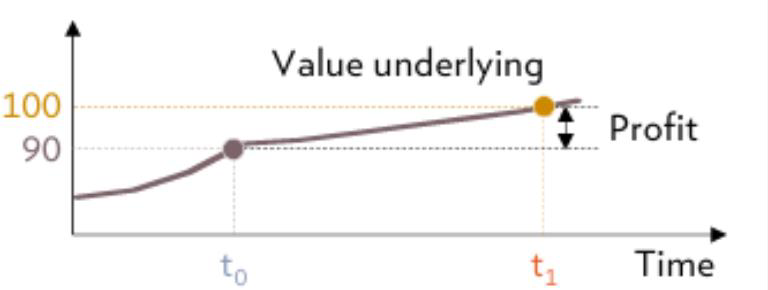
Profit from a future due to price changes. In this example, the agreed upon price is 90 at time t₀ and the trade is executed at t₁, when the actual price is 100. The price of the future (and therefore the gains or losses) depends linearly on the price of the underlying.
Futures may be settled by delivery of the underlying (physical delivery) or by the cash equivalent (cash settlement). Gains/losses are taken into account daily.
Important to know before selling a future
| Item | Details |
|---|---|
| Maximum gain | Difference between settlement price and actual future price of underlying asset at exercise date |
| Maximum loss | Unlimited loss |
| Expectations | Falling prices of underlying asset |
| Obligations | Paying initial margin, covering margin calls, selling underlying asset at the agreed-upon settlement price at exercise date |
| Rights | – |
| Conditions | Margin required |
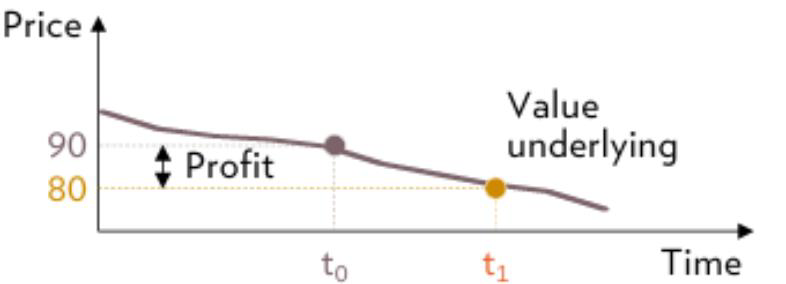
Profit from a future due to price changes. In this example, the agreed upon price is 90 at time t₀ and the trade is executed at t₁, when the actual price is 80. The price of the future (and therefore the gains or losses) depends linearly on the price of the underlying.
Futures may deliver (by underlying physically delivered or cash equivalent). When selling (i.e. short position), the seller is in a short position in the corresponding underlying asset. The seller is forced to buy the underlying asset at market conditions if the buyer exercises. The seller is thus forced to buy the underlying asset at market conditions that may be unfavourable. Gains/losses are taken to account daily.
A closer look at futures
General properties
Futures are obligations, i.e. future contracts need to be closed out prior to maturity if not wished to be exercised. If a future is not closed out before maturity, it can be settled in the following two ways.
| Settlement | Definition |
|---|---|
| Cash settlement | Only the difference between the strike and the actual value of the underlying is exchanged |
| Physical delivery | The actual underlying is exchanged against cash |
Contracts that have a physically existing asset as an underlying (e.g. commodities such as crude oil, wheat, iron ore) are usually settled by physical delivery. Contracts that are based on a reference rate (e.g. index) can only be settled in cash.
How futures work
Example: Buying an equity future
At the exercise date, the difference between the actually observed price and the agreed-upon price is settled by either delivery of the equity or by a cash settlement of the difference.
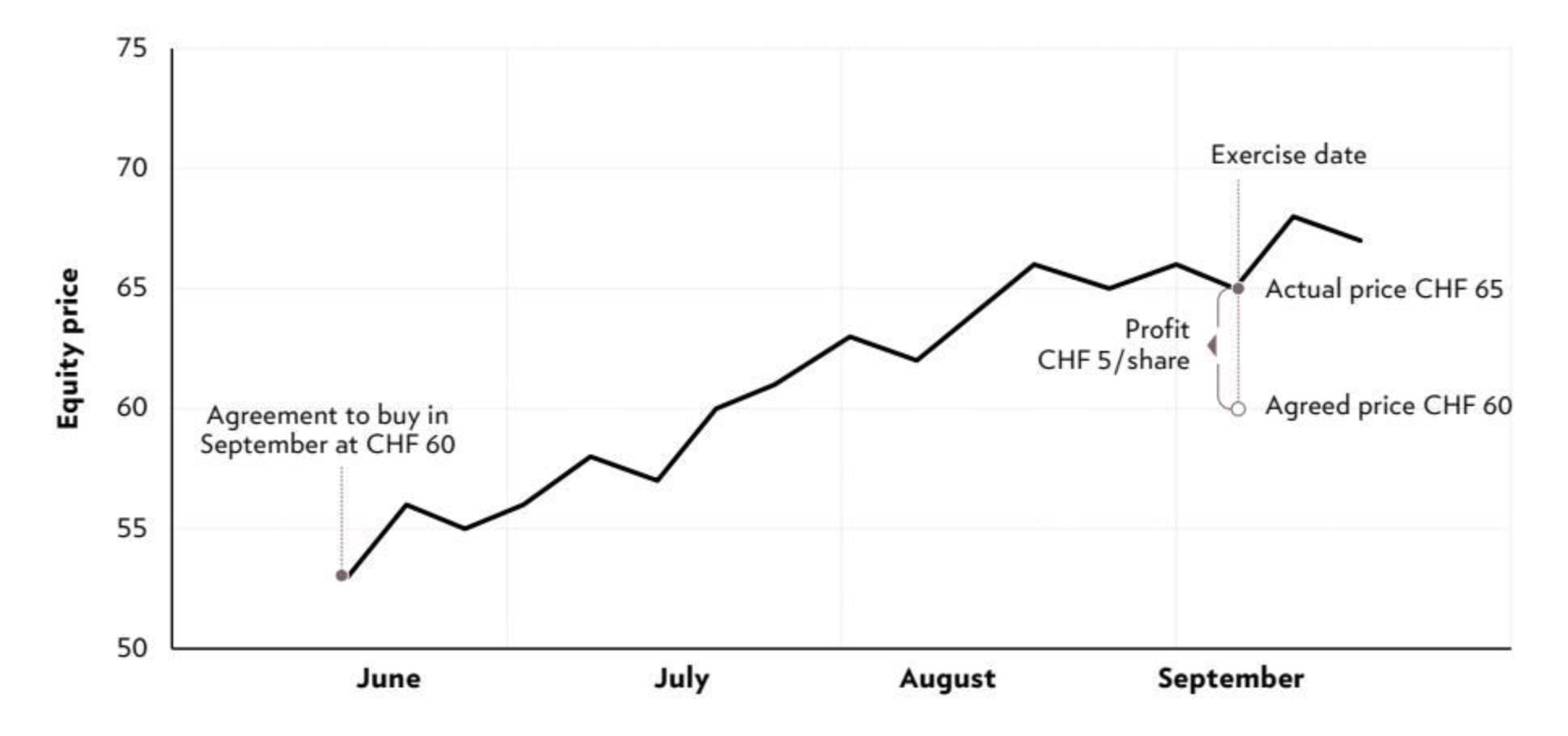
Price of a future
Futures' prices are determined by so-called opportunity costs or the cost of carry. Cost of carry describes the costs for the seller of the future for remaining in possession of the underlying asset. Consider the following example.
- Farmer Doe would like to buy from Farmer Smith a forward on ten cows deliverable and payable in one year. The current market price for a cow is CHF 5,400.
- Farmer Smith needs to keep those 10 cows alive and calculates the costs and gains from the cows during the year until delivery date.
| Costs | Amount | Profit | Amount |
|---|---|---|---|
| Forage | CHF 300 | Milk sales | CHF 2,000 |
| Nurture and stable lease | CHF 600 | ||
| Financing | CHF 500 | ||
| Total costs | CHF 1,400 | Total profits | CHF 2,000 |
Similar calculations can be done for any other underlying, including complex financial instruments such as an index. The costs would be expressed by the interest earned in a risk-free alternative investment, while the profit is any dividend paid.
Leverage and margin
Futures require the maintenance of a margin account as a prerequisite. When opening a futures contract, the investor makes a cash deposit, the so-called 'initial margin', which is a minimum deposit required to process the contract.
- The margin account is used to debit/credit losses/gains on the futures contract on a daily basis (mark to market).
- At liquidation of the contract, the initial margin is refunded plus/minus all accumulated gains/losses.
- When accumulating losses, and when the balance of the margin account falls below a defined value (maintenance margin), the investor will be required to make an additional deposit up to the initial margin (margin call).
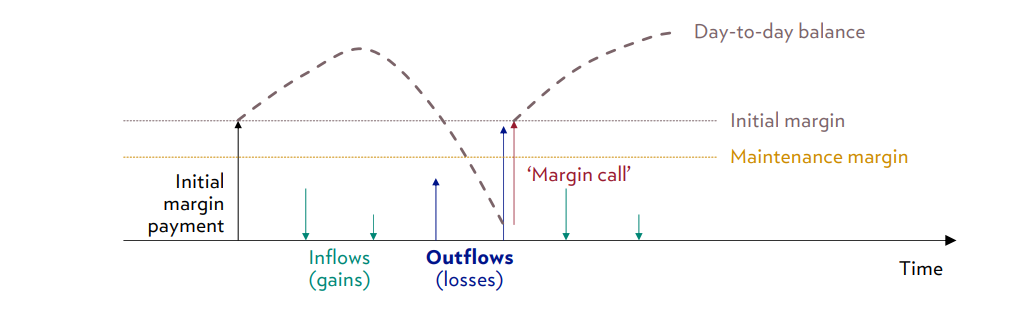
The initial margin required depends on the volatility of the underlying. However, it will be substantially less than the actual contract volume. Therefore, a small investment amount moves a far larger value in terms of the underlying. This leverage amplifies potential gains and losses. It contributes significantly to the risks of the instrument.
Differences between futures and forwards
Forwards are similar to futures with regards to their purpose: they allow the investor to buy/sell an asset on a specific date at a specific price. The major difference is that futures are standardised exchange-traded contracts, while forwards are basically private agreements between two parties that are less rigid in terms and conditions.
Settlement and delivery differ.
| Instrument | Settlement |
|---|---|
| Futures | Changes in market price are cleared daily. Settlement can occur on a range of dates |
| Forwards | Forwards have one settlement date and are cleared/settled on that date only |
Due to these differences, futures and forwards differ in their risk exposure.
| Risk | Forwards |
|---|---|
| Counterparty risk | Since forwards are agreements that are traded over the counter, the counterparty risk tends to be higher than in the case of futures and requires the respective carefulness in the selection of the investment. |
| Liquidity risk | Depending on the type of contract, forwards tend to have higher liquidity risks. |
Futures and forwards with a commodity underlying
In the case of forwards or futures with a commodity underlying, physical settlement results in the delivery of the good to the buyer. If futures or forwards on commodities are used as pure investment vehicles, they need to be closed out prior to maturity to avoid unwanted physical delivery. (Note that commodities are traded in bulk and futures/forward contracts on commodities such as ores, oil, and agricultural goods are common.)
- Forward contracts are often used for hedging purposes and tend to be settled in cash or by delivery of the underlying.
- Futures contracts are frequently closed out prior to maturity without actual delivery at all.
As stated previously, the forward/futures price is calculated based on the cost of carry or opportunity costs. Two situations may arise:
| Situation | Definition |
|---|---|
| Contango | The spot price is lower than the price of an early future (i.e. a surcharge on the futures price). |
| Backwardation | The spot price is higher than the price of an early future. |
Contango and backwardation are particularly important in the case of a commodity underlying, since a contango /backwardation can occur in addition to the normal cost of carry. This may be the result of seasonal effects, climate, limited storage capabilities – situations that may arise suddenly for perishable or consumer goods. Thus, the forward price may change suddenly even if spot prices do not.
Important legal information
Legal entity
U Wealth SA – 8C avenue de Champel, 1206 Genève, Suisse. Supervised by FINMA (Swiss Financial Market Supervisory Authority).
Educational and Informational Disclaimer
This content is provided for informational and educational purposes only. It does not constitute marketing material, nor is it the result of independent financial/investment research. It has not been prepared in accordance with the legal requirements designed to promote the independence of financial research and is not subject to any prohibition on dealing ahead of the dissemination of such research. The content has been prepared by U Wealth SA, which is authorised and regulated by FINMA (Swiss Financial Market Supervisory Authority). The information may be updated irregularly or in response to significant developments.
Informational Purposes Only
All information and opinions were valid at the time of writing and are subject to change without notice. This document is provided for informational purposes only and does not constitute legal, tax, accounting or investment advice, nor does it constitute an offer or invitation to buy or sell any financial instrument. Opinions expressed herein reflect the current views of the authors but not necessarily those of U Wealth SA as a whole. While the information is believed to be accurate and sourced from reliable providers, U Wealth SA makes no warranty as to its accuracy, completeness, or timeliness. U Wealth SA accepts no liability, to the extent permitted by law, for any direct or indirect damages or losses arising from the use of this material or any decisions taken based on it.
Suitability & Professional Advice
Investments mentioned may not be suitable for all investors. Each investor should consider the suitability of an investment to their personal circumstances and objectives and consult their professional advisor before making any financial decision. This content does not constitute a personal recommendation and does not take into account your personal investment profile or financial situation.
Sustainability / ESG
This material does not necessarily adhere to ESG regulations or standards that may apply in other jurisdictions. For details on ESG criteria and any potential impact on financial return or investment eligibility, please contact U Wealth directly.
General Risks
The value of and income from investments may rise or fall, and investors may not recover the amount invested. Financial instruments may be exposed to various risks, including but not limited to market, credit, political, and currency risks. Past performance and simulated returns are not reliable indicators of future performance. Structured products mentioned do not represent collective investment schemes under Swiss law and are not supervised by FINMA as such. Investors do not benefit from the specific protections provided by the Swiss Federal Act on Collective Investment Schemes.
Third-Party Data
Some information may originate from third-party providers such as credit rating agencies, financial data sources, or ESG data platforms. U Wealth SA does not guarantee the accuracy or completeness of this data and declines any liability related to its use.
Restricted Distribution
This content is intended solely for recipients located in Switzerland and is not directed to any person or entity in any jurisdiction where its distribution would be contrary to local laws or regulations. This document may not be reproduced or distributed without prior written consent from U Wealth SA.
United States
UNITED STATES: NEITHER THIS CONTENT NOR ANY COPY THEREOF MAY BE SENT, TAKEN INTO OR DISTRIBUTED IN THE UNITED STATES OR TO ANY US PERSON. © U Wealth, 2025
Contact information
contact@uwealth.ch | +41 (0)22 545 51 40